Connect with us
 

Houston Rockets

Will Carroll Q&A: Beverley’s knee remains a “fairly major concern” for Rockets

Will Carroll, a national sportswriter specializing in injuries and treatment, joins us to discuss the status of Patrick Beverley’s knee and his future.

Published

on

Patrick Beverley

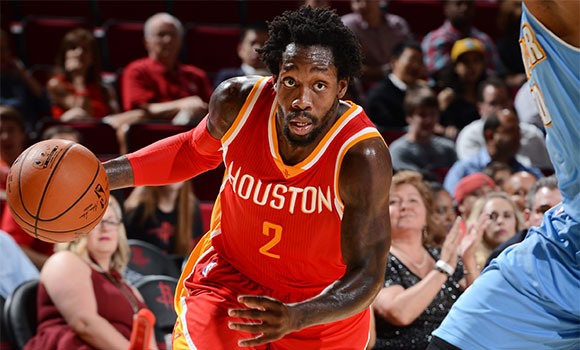
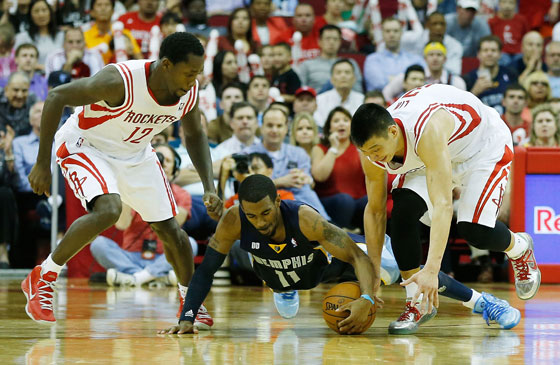
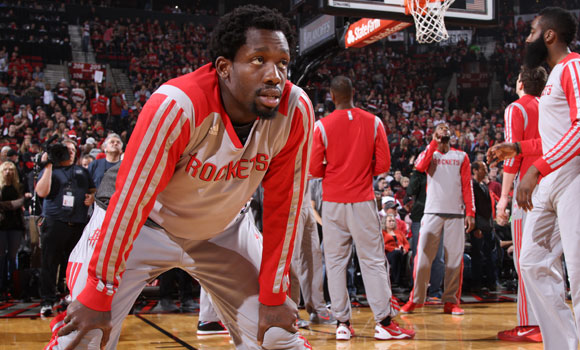
Patrick Beverley may not be out of the woods yet when it comes to his troublesome right knee. After tearing the meniscus in late March and briefly reaggravating it in Game 1 of the playoffs vs. Portland, it remains a concern for both he and the Rockets as they map out his usage for the 2014-15 season.

With training camp approaching, the Rockets and Beverley are working together on a plan to manage and stabilize the knee and particularly the muscles surrounding it. Beverley, of course, opted against having any surgical procedure to correct the injury, instead returning to the court after just two weeks and playing an integral role in the team’s playoff run.

Beverley’s ability to avoid surgery was in contrast to many other high-profile athletes with meniscus tears, including Houston Texans rookie linebacker Jadeveon Clowney, who underwent surgery just this week and is expected to be out at least 4-to-6 weeks.

Will Carroll, lead writer of sports medicine at Bleacher Report and a long-established expert in the field of sports injuries, spoke to us and also joined the Red & Orange Report podcast to discuss how the Rockets may manage Beverley going forward. A transcript of our conversations is below:

Advertisement

Q: Ultimately, Pat ended up not choosing to go through with a surgical procedure. How much of a concern is this for Pat Beverley going forward?

A: It’s a fairly major concern. I know Daryl Morey and the staff there have calculated the odds, and they’ve gone with a very aggressive rehab protocol. They think they can stabilize that knee otherwise.

In pulling part of the meniscus or even in a repair, it’s not going to be exactly as it was. It’s going to change the internal structure of the knee. So what you have to do, if you can’t stabilize that portion, if you’re not putting it back as close to 100% as you can, you have to stabilize around it. In any sort of situation with that, that’s where you want to focus.

In early rehab, you want to work on those secondary stabilizers. If the muscles surrounding the knee are not only intact but strong, they can get that sense of where things are in space and when things are getting too taxed. If you’ve ever sprained your ankle, you felt it. You couldn’t do much. Athletes tend to have a much better proprioceptive and spatial sense about them. It’s part of their gift. So Beverley’s going to have to work really hard, and I’m sure he has, all the way up to and through training camp to get those stabilizers. He’s also going to have to not overtax himself to where his muscles are tired and cease to be the strong stabilizers that he’s going to need to protect that knee.

So the medical staff is going to have to work with the analytics staff, which is going to have to work with their sport science staff, to put everything together. This is going to be an amazing puzzle of human performance to keep him as healthy as they possibly can.

Advertisement

If you think about it, he’s going to have to do all the things he has to do athletically and within a team context on top of try to manage his own fatigue and manage his recovery and continue to do a rehab/prehab protocol throughout the entire season. In other words, Patrick Beverley’s going to be spending a whole lot of time with the medical staff. We don’t see that outside. That’s one of those things. It’s that invisible game of sports medicine and sports science and human performance that some people are putting hours and hours of their lives into. We don’t reward them. Most people don’t know who the athletic trainers and physical therapists are that get these athletes back on the field, but they’re an incredibly important part of any team.

Q: In general, what is the risk profile of someone with an untreated meniscus tear? Without accounting for the specifics of a team or player’s rehab plans, what are the general future problems that an NBA player playing with this injury might have?

A: It’s certainly risky, but the doctors feel it’s manageable, so I have to go with that. Mostly you see arthritis. It can get more serious where there’s grinding and has to be cleaned out or even microfracture. Down the line, knee replacement is possible, but that’s in the general population.

Q: Are the Rockets, as an organization, prepared for this?

A: I think where the Rockets might have an advantage is that they are a very data-driven team. They’ve been using the Skyview cameras, they’ve been using a lot of analytics, things like the Catapult system which tracks the players and their statistics such as heart rate and respiration, and I think with all that data, that’s going to give them an advantage in figuring out what Beverley can and cannot do and how to manage that properly.

Advertisement

Q: I know both the team and Pat himself are going to be on top of this. One of our good sources at ClutchFans said earlier this summer that Pat was contemplating going to Germany and trying some of those treatments. I don’t know that he actually did it — if he did, we never heard about it — but I know that he and the team are looking at contingencies. Would a minutes restriction help? If you play him 30-to-32 minutes per night instead of 38 minutes, is that something that may help him last longer?

A: Yeah, but that’s oversimplifying it a little bit. I don’t think that you’re wrong. If this were two years ago, my answer would’ve been ‘Yes, absolutely’. But again, with the amount of data that we have, the new data from the cameras, the sensors and the performance data we can get, things are changing. If you run him on an AlterG treadmill, which is one of those anti-gravity, air-pressure treadmills — I know Houston is one of the teams that has one — you’re going to be able to figure out what he can do. What kind of sprints can he run? Because basketball isn’t like running a 5K. You can go through a lot of information and work on a lot of things, and you can have him on court in practices and scrimmages and then figure this out.

So it would be simplistic, but not incorrect, to say that a minutes restriction could do that. But I think it’s going to be more than a minutes restriction. How is he going to be out there? Is it better for him to be out there for 4 minutes and then a rest, or is it better for 10 minutes and then come back? How does his knee react to that?

There are so many factors that just a few years ago, we wouldn’t have had access to. And now, because we have this emerging data, we’re going to have a better sense for it. You’re not wrong about a minutes restriction, but I think they’re going to be able to come up with an exceptionally-individualized program that’s going to make it better for him. Sensors and sensor data is one of the most exciting parts of sport science right now. And I think it’s absolutely amazing how fast it’s moving.

Q: Beverley is a free agent in July 2015. With the medical knowledge that teams have today, is there a chance that this lingering issue could impact his market value going forward?

Advertisement

A: Absolutely, but it should be a known quantity by then. It depends on where he goes. Some teams are better at managing things like this, and Houston’s one of them.


Houston Rockets

Seat changes are officially underway at Toyota Center

Published

on

Photos via Houston Rockets, Toyota Center

In a self-funded project (reportedly at an investment of over $10 million), the Houston Rockets are replacing the 17,000 bowl seats inside their home arena of Toyota Center. The new seats feature a black sports-weave material, which will represent a noticeable change relative to the venue’s current color scheme of red.

In advance of Wednesday’s game versus the Washington Wizards, which kicks off a three-game homestand over the next five days, the Rockets completed the renovation on three upper-level sections. Others throughout the building will change as the 2025-26 season progresses.

All of the new seats, which are shown below, include attached cup holders.

Photos via Houston Rockets, Toyota Center

Because the initial completed sections are in the upper level, the backdrop is unlikely to look different for fans watching on television. However, that could change as the season progresses and the work eventually migrates to the lower level.

Advertisement

No scheduling shutdowns are anticipated due to the project, and the change will not cause the venue to lose any seating capacity. The current bowl seats, other than the suite level, are “original to the building,” which first opened in 2003.

The seating and platform upgrades are among many recommendation from a facility condition assessment by Venue Solutions Group, which recommended that Toyota Center needs a total of $635.8 million in maintenance work over the next 20 years.

In 2025, Toyota Center is now in its third operational decade. With many architectural, mechanical, and technological features original to the building, replacements are becoming necessary after 20-plus years of use, according to the assessment (via the Houston Business Journal). But while the arena requires modernization, the assessment found that the facilitity generally remains in good condition and has been well-maintained throughout.

Under the leadership of team owner Tilman Fertitta, the Rockets have made a series of renovations to Toyota Center in recent years. That process remains ongoing, with seating upgrades representing the latest and most visible phase.

Photos via Houston Rockets, Toyota Center

Photos via Houston Rockets, Toyota Center

Advertisement
Continue Reading

Analysis

2025 NBA Cup: Rockets in difficult spot after opening loss to Spurs

Published

on

Last fall, the Houston Rockets made an impressive run to the semifinals of the annual Emirates NBA Cup. That in-season tournament run concluded with a last-second home win over the Golden State Warriors in a thrilling quarterfinal and a competitive semifinal loss to the Oklahoma City Thunder in Las Vegas.

Both were single elimination games, for tournament purposes, and the added intensity may have helped a young Rockets team as they geared up for an eventual playoff appearance.

In 2025, however, a return trip to the knockout rounds is becoming unlikely.

In a grouping that some are calling the “group of death,” the Rockets took an 11-point loss in Friday’s game at San Antonio, their first of 2025 NBA Cup play.

Advertisement

So, going forward, Houston’s margin of error (for tournament purposes) is minimal.

Only four teams per conference advance to the eight-team quarterfinals in December, with each conference featuring the winner of its three groups and a “wild card” — i.e. the team with the best record and point differential among second-place finishers.

Based on that high threshold and the small number of teams, every team that advanced to the 2024 knockout rounds went at least 3-1 in group-stage play.

So, for all intents and purposes, the Rockets likely need to sweep their remaining three group games — at home on Nov. 14 and Nov. 21 versus the Portland Trail Blazers and Denver Nuggets, and at Golden State on Nov. 26 — to have a chance of advancing.

But they also likely need to win at least one of those by a large margin, since they’re currently at a -11 point differential. They would also lose a head-to-head tiebreaker with the Spurs.

Advertisement

Right now, the Spurs and Blazers are tied atop the group at 1-0, though San Antonio currently holds the tiebreaker based on differential (+11 vs. +2). The Nuggets (1-1, +23) are in third, while the Rockets (0-1, -11) and Warriors (0-1, -25) are tied for last.

For tiebreaker purposes, the 25-point win that Denver had over Golden State (playing without Steph Curry due to illness) could loom large.

Long story short, the Rockets almost certainly need to sweep their final three games to have a chance of advancing out of Group C, and at least one of them may need to come by a large margin. It’s not impossible, but it’s a heavy lift.

As for the 2025-26 regular season, Houston (5-3) had its five-game winning streak snapped with Friday’s loss. Should the Rockets not advance in NBA Cup play, they would have two games added to their schedule in the week of Dec. 9-16 versus West rivals who they are currently slated to play only three times. One would be at home, and the other on the road.

The possible opponent pool would consist of the Thunder, Warriors, Nuggets, Minnesota Timberwolves, Los Angeles Lakers, and Los Angeles Clippers — and since these would be non-Cup matchups, it would have to be opponents who were also eliminated in group-stage play.

Advertisement

For the Rockets and other teams across the league, those matchups and dates will be announced after the Nov. 28 conclusion of all 2025 NBA Cup group games (schedule).

Continue Reading

Analysis

Report: Rockets not likely to pursue Ja Morant trade with Grizzlies

Published

on

Rafael Stone Houston Rockets general manager

Just prior to training camp, the Houston Rockets lost veteran point guard Fred VanVleet (right knee ACL repair) to a potentially season ending injury.

That development led many observers around the league to speculate that Houston might pursue an external upgrade at point guard.

Yet, six games into the 2025-26 season, the Rockets (4-2) own the NBA’s best offense. They also have the majority of their point-guard reps going to Amen Thompson and Reed Sheppard, two promising young talents who should only improve as the year progresses.

With that in mind, even as tensions seemingly rise in Memphis between the Grizzlies and two-time All-Star Ja Morant, it doesn’t seem as though Houston is interested in pursuing a trade (should the 26-year-old eventually hit the market).

Advertisement

The Athletic’s Sam Amick writes:

The Grizzlies’ next opponent, the Houston Rockets, need a point guard after losing Fred Van Vleet to a torn ACL in the preseason… but, per a team source, are unlikely to pursue him.

The are, of course, some extracurricular concerns involving Morant.

But from a Houston perspective, the logic appears to be basketball-related.

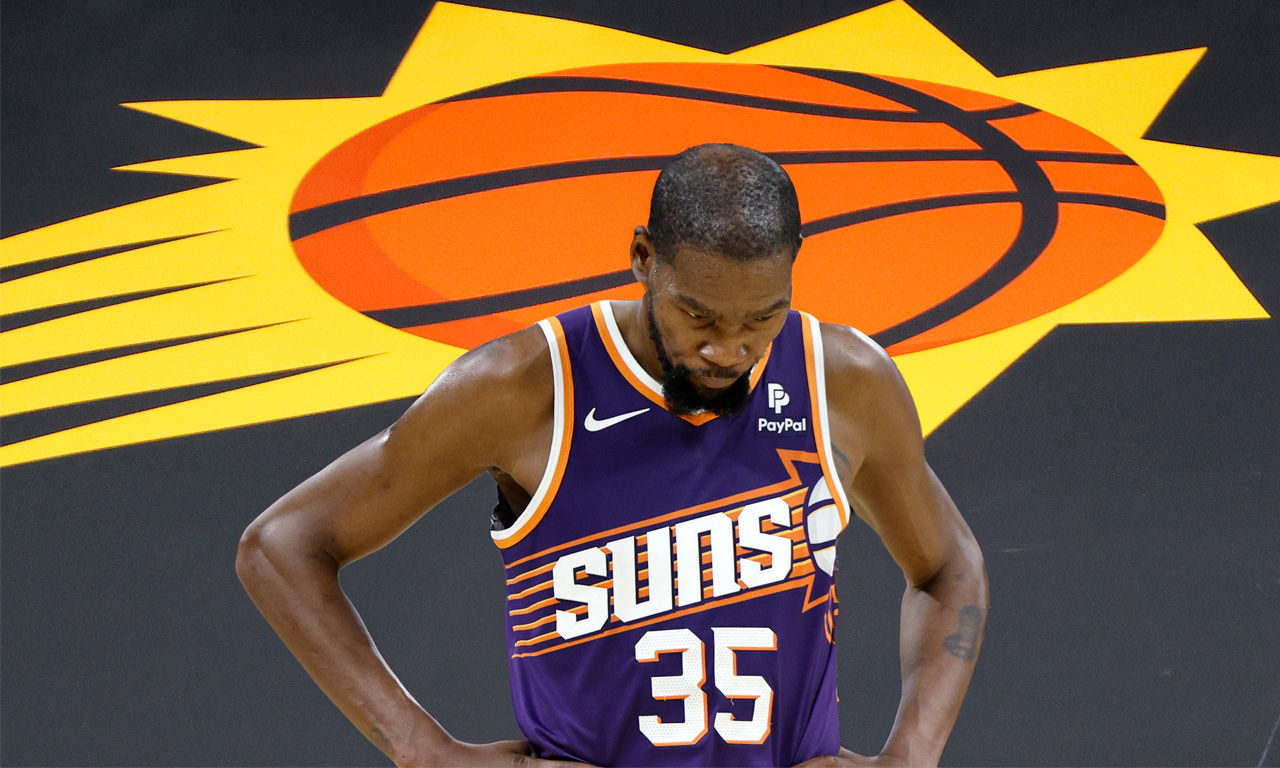
The Rockets have an elite offense, as is, so why would GM Rafael Stone bring in a high-usage player who would potentially take away touches and playmaking opportunities from the likes of Thompson, Kevin Durant, and Alperen Sengun?

The Rockets also expect VanVleet back at some point, and by the start of the 2026-27 season at the latest. Morant is under contract through the 2027-28 campaign, and historically, he’s a significantly higher-usage player than VanVleet.

Advertisement

Should the on-court results significantly change, it’s possible that Stone and the Rockets could revisit the Morant option by the in-season trade deadline of Feb. 5, 2026. But based on what we know now, it doesn’t appear likely that Houston will be involved in any bidding.

Continue Reading

Analysis

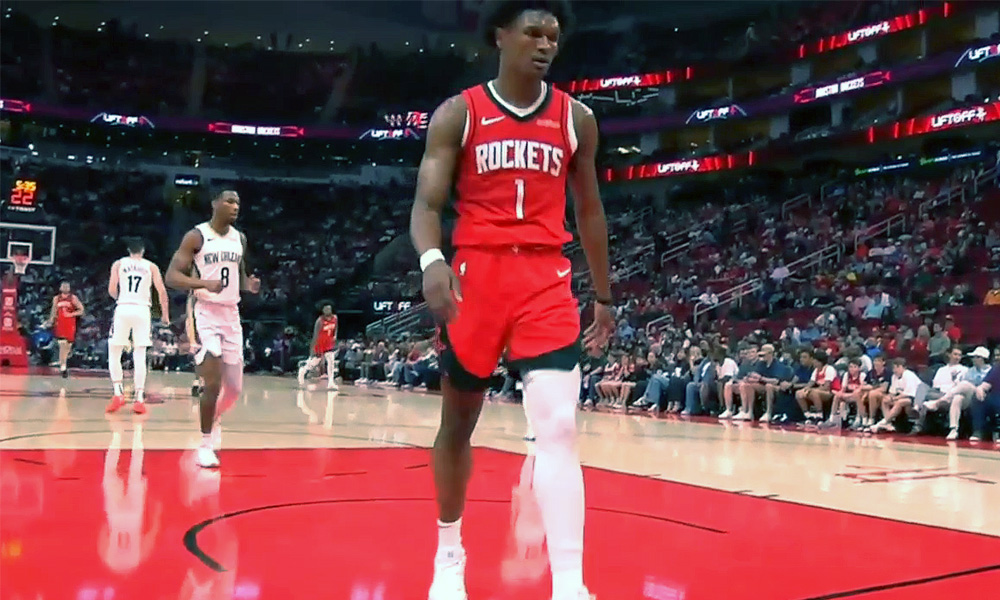
As Houston’s point guard, Amen Thompson draws praise from Jason Kidd for his offense

Published

on

HOUSTON — Amen Thompson may not look like a traditional point guard, but he’s filling in capably for the Rockets in the absence of veteran Fred VanVleet.

The Rockets (3-2) entered Monday’s home game versus Dallas (2-4) on a three-game winning streak, and their 22-year-old rising star was +77 when playing during those games.

For the season, Thompson is averaging 15.0 points (46.7% FG), 6.0 rebounds, 5.8 assists, and 2.6 turnovers per game, and the versatile 6-foot-7 prospect remains best known for his defense (Thompson earned NBA All-Defensive First Team honors last season).

Yet, in pregame comments from Toyota Center, Mavericks head coach Jason Kidd — a Hall of Fame point guard from his NBA playing days — went out of his way to praise Thompson’s abilities on offense.

Advertisement

When asked about Thompson’s defense, Kidd replied:

He’s playing the game at a very high level, not just on defense but on the offensive end, too. Driving the ball, and putting a lot of pressure on the defense at the rim.

I know everyone talks about his defense, but the way he’s handling the ball, it puts a lot of pressure (on the opponent).

Houston continues to rank No. 1 in the NBA in offensive rating, so Thompson’s individual contributions are clearly making it work for the Rockets as a team, as well.

The Rockets are without Jabari Smith Jr. (right ankle sprain) in Monday’s game, so Thompson started alongside Kevin Durant, Josh Okogie, Tari Eason, and Alperen Sengun.

Advertisement
Continue Reading

Analysis

Rockets rout Raptors as Houston becomes NBA’s No. 1 offense

Published

on

With Wednesday’s 139-121 victory at Toronto, the Rockets (2-2) secured their first winning streak of the 2025-26 campaign and are now NBA’s top-rated offense of the young season.

Featuring Dave Hardisty, Ben DuBose, and Paulo Alves, our “ClutchFans Live” postgame show recaps all the key storylines from that showing against the Raptors.

Discussion topics include big scoring games from Kevin Durant and Jabari Smith Jr.; a dominant rebounding performance, led by interior strength from Steven Adams and Alperen Sengun; a subpar shooting night by Reed Sheppard; and potential concerns on defense, where the Rockets currently rank in the bottom half of the league.

In the win at Toronto (box score), Durant, Smith, Sengun, and Amen Thompson combined for a whopping 92 points, with each shooting at least 50% from the field.

Advertisement

Continue Reading

Trending