Connect with us
 

Houston Rockets

The Chandler Parsons Contract: Salary Cap Implications of Exercising or Declining the Team Option

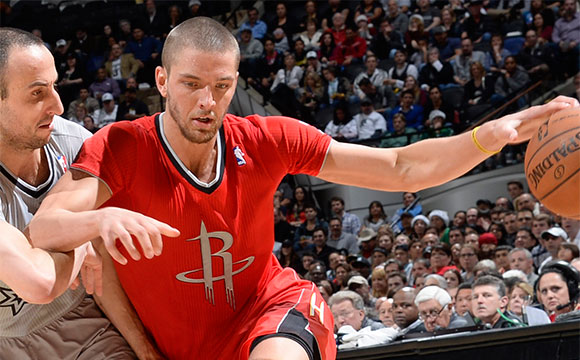
There is no obvious choice for the Rockets on whether to exercise or decline the team option on Chandler Parsons, but David Weiner takes a look at the salary impact of both routes.

Published

on

Chandler Parsons Contract

The decision on whether to exercise their team option on Chandler Parsons’s contract is among the Rockets’ biggest quandaries heading into the summer of 2014

***UPDATED June 7, 2014***

Due to additional information obtained and confirmed, as well as a more careful reading of the 2011 NBA Collective Bargaining Agreement, this piece has been updated to more accurately describe the cap hit for Chandler Parsons if the team option on his contract is declined.

This article is intended solely as an analysis of the salary cap effects of certain decisions that the Rockets make with respect to Parsons’s contract and is not intended to express an opinion on such decisions.

The Partial “Guarantee” And The Team Option That Nullifies It

On January 1, 2014, by not having been waived before such date, a portion of Parsons’s 2014-15 salary ($624,771, to be exact) became guaranteed.  If Parsons is not waived by June 30, his entire 2014-15 salary ($964,750) becomes guaranteed.

Advertisement

However, these “guarantees” are illusory.

Parsons’s contract includes a team option for the 2014-15 season.  Because it is a team option, the Rockets essentially get to decide whether that season of his contract exists or not.  By declining the option, Houston has the power to nullify those guarantees, which would only exist if the option were exercised.

In the end, the partial guarantee earned on January 1 is largely pointless.  (Hypothetically, the Rockets could exercise the team option on June 28 and then immediately change their mind about Parsons and waive him, in which case Parsons would be $624,771 richer for having had that partial guarantee . . . but that is a fairly ridiculous set of circumstances.)

With that little nugget of information now known, let’s take a closer look at the salary cap implications of the Rockets either exercising or declining that team option.

Exercising The Option

If the Rockets elect to exercise their team option on Parsons’s contract, then Parsons will earn — and will count against the salary cap in the amount of — only $964,750.  That is only slightly greater than the minimum salary for a three-year veteran.

Advertisement

Because of Parsons’s miniscule 2014-15 salary, his cap hold on the Rockets’ books when he hits free agency in 2015 until he is signed (either by the Rockets or another team) will be a paltry $1,833,025.  This figure is equal to 190% of Parsons’s 2014-15 salary, which is the method used to determine cap holds for players (other than those coming off rookie scale contracts, which Parsons is not) making below the average player salary and for whom a team holds full Bird rights.

By having such a small cap hold for Parsons, the Rockets would be able to use all of their available cap room in 2015 — except for that $1,833,025 cap hold amount — to pursue outside free agents (in a free agent class that is expected to include Kevin Love and LaMarcus Aldridge), then later exceed the salary cap to re-sign Parsons to any amount using his Bird rights.

Declining The Option

If the Rockets elect not to exercise their team option on Parsons’s contract, and if the Rockets extend a qualifying offer to Parsons (more on that below), then Parsons would become a restricted free agent.

By making Parsons a restricted free agent, the Rockets would have the right to match any offer he receives from another team.  Typically, restricted free agents whose teams are clearly interested in re-signing them do not receive the level of interest that a similarly-situated unrestricted free agent does, thereby “chilling the bidding” on the player and potentially allowing his original team to re-sign him at a relatively lower salary.  (A recent example of this is Nikola Pekovic, who had to wait around for most of last summer without an offer sheet before eventually re-signing with the Timberwolves.)

Advertisement

Because Parsons would have been under the same contract with the Rockets for three seasons (2011-2014), the Rockets would have full Bird rights on Parsons and could exceed the salary cap to re-sign him to a five-year deal at any amount up to the maximum salary (expected to be a starting salary in the $14 million range for players with 0-6 years of service).

(NOTE:  Parsons is not subject to the “Gilbert Arenas Rule” that governed the structure of the contracts that the Rockets handed out to Omer Asik and Jeremy Lin.  The Arenas Rule is limited solely to one- and two-year veterans.  There is no “poison pill” that another team could work into an offer sheet for Parsons.)

If Parsons becomes a restricted free agent, then his cap hold next summer will be the greatest of (a) his “ordinary” cap hold of 190% of his 2013-14 salary (or $1,760,350), (b) the first year salary in any offer sheet he signs that the Rockets wish to match, or (c) his qualifying offer.

A qualifying offer is the minimum amount that a team must offer to a player (as a one-year deal) by June 30 each year in order to make him a restricted free agent.  Without a qualifying offer, the player automatically becomes an unrestricted free agent.  Under the prior CBA, this would have been a similarly low amount to his “ordinary” cap hold. However, the new CBA changed the rules regarding qualifying offers to young players who significantly outplay their draft status.

Under the new CBA, if a young player taken outside the first half of the lottery meets certain “starter criteria” in either the year prior to his free agency or averaged over the two years prior to his free agency, then he is entitled to a higher qualifying offer.  In the case of second round picks meeting the starter criteria, they are entitled to a qualifying offer equal to 100% of the rookie scale qualifying offer for the 21st selection of the draft class whose rookie scale contracts are up for qualifying offers this summer.

Advertisement

As applied to Parsons this summer, he is entitled to whatever qualifying offer the 21st pick in the 2010 NBA Draft would have gotten if signed to 100% of the rookie scale.  (FYI, the 21st pick in 2010 was Craig Brackins, but that is irrelevant here.)  That amount is $2,875,130.

(For more information about restricted free agency, qualifying offers and the starter criteria, read this portion of Larry Coon’s NBA Salary Cap FAQ.)

On the other hand, if Parsons is not extended a qualifying offer and is allowed to become an unrestricted free agent in 2014, he would count against the Rockets’ cap in the amount of his “ordinary” cap hold ($1,760,350).  However, since the chief purpose of declining Parsons’s option is to make him a restricted free agent, it is unlikely this would happen.

So, for all intents and purposes, the cap hit for Parsons if his option is declined will be $2,875,130 . . . until he signs an offer sheet or a new contract.

While the Rockets do not expect to have much (if any) salary cap room in the summer of 2014 assuming that no further roster moves are made, it is entirely possible that subsequent roster moves (such as those involving Asik and/or Lin being traded for less salary or expiring contracts) could create a situation in which 2014 cap room becomes a legitimate priority for the Rockets.  In such an event, the amount that Parsons counts against the cap could become a material concern.

Advertisement

Conclusion

The Houston Rockets face a major decision on whether to exercise their team option on Parsons.  Of course, there are various other factors in play here besides just the salary cap mechanics associated with each decision.  Such factors include the team’s need for salary cap room in light of subsequent roster moves (such as an Asik trade), the availability of outside free agents, any additional leverage held by NBA super-agent Dan Fegan (hired by Parsons this past summer), and, perhaps most importantly, the “human element” of dealing with Chandler Parsons on a personal level.

When all factors are included, there is no easy choice for the Rockets.  But it is a choice that will be closely followed by Rockets fans.

Advertisement

Houston Rockets

Can Fred VanVleet rejoin Rockets this season? Time is running out

Published

on

Photo via Houston Rockets, Rockets.com

The Rockets have struggled on their current road trip, going 1-2 with a pair of brutal losses in Chicago and Minnesota. Each featured the Rockets blowing a multi-possession lead late in the fourth quarter or overtime, and that’s an all-too-familiar theme this season.

With those defeats, Houston (44-29) has fallen to No. 6 in the tightly packed Western Conference standings, which would mean opening the 2026 NBA playoffs on the road and without home-court advantage. That wouldn’t inspire much confidence, since the Rockets are just 19-19 away from Houston this season.

And if the Rockets are going to turn things around by the playoffs, it appears they’ll have to figure things out from within their current rotation.

Per this week’s update from head coach Ime Udoka, it doesn’t appear that Fred VanVleet (right ACL tear) will return to game action until next season.

Advertisement

When asked about VanVleet’s current activity levels, Udoka said:

Shooting, cutting, moving, non-contact (drills). That’s pretty much the extent of the on-court. Right around the six-month mark, you can start to ramp up things. But, no contact at any point soon, or nothing we’re looking forward to, honestly.

Obviously, you’re not looking at playing if you’re not getting on the court and (going through) contact, this late in the season.

The 2026 playoffs begin in exactly three weeks, and considering that VanVleet hasn’t gone through contact work since his September injury, any physical ramp-up period will likely be prolonged. Post-ACL surgery, the average timeline to return to NBA games is 9-12 months.

Thus, while not officially ruled out, time is running out in late March.

With VanVleet unavailable, young guards Amen Thompson and Reed Sheppard have taken on the majority of Houston’s ball-handling and playmaking responsibilities this season.

Should VanVleet not return in the 2025-26 campaign, he is expected to be fully cleared by the time training camp for the 2026-27 season opens in late September.

Over his two playing seasons (2023-24 and 2024-25) with the Rockets, VanVleet averaged 15.9 points (36.9% on 3-pointers), 6.9 assists, and only 1.7 turnovers per game as Houston’s starting point guard. Now 32 years old, VanVleet is extremely well regarded for his leadership and defensive abilities, as well.

Advertisement

To say the least, his on-court absence has been felt, and that will likely continue to be the case until next season’s training camp opens in a few months.

Continue Reading

Houston Rockets

Will starting Reed Sheppard over Tari Eason fix Houston’s offense?

Published

on

Photo via Houston Rockets, Rockets.com

In the 2025 portion of the 2025-26 season, the Rockets ranked fifth in the NBA at 120.5 points per game. Houston went 20-10 (.667) in that sample, good for a 55-win pace over a full season.

But in calendar-year 2026, Houston is second-to-last (No. 29 among 30 teams) at 108.9 points per game. The Rockets are just 22-17 (.564) in that sample, which equates to a 46-win pace.

To say the least, the 117 points that Houston scored in Friday’s blowout victory over Atlanta — while shooting 50.6% overall and 46.7% on 3-pointers — was much closer to the 2025 formula. The Hawks (38-32) entered as the league’s hottest team, having won 11 straight games.

So, what changed? Certainly, there were strong statistical showings across the board (box score). But there was one new wrinkle at the outset.

Advertisement

After a prolonged slump, Tari Eason was moved to a bench role, while second-year guard Reed Sheppard started in his place. The change seemed to pay immediate dividends.

“It’s just another threat outside the 3-point line,” said All-Star forward Kevin Durant.

“All the great basketball teams have multiple guys that can create for themselves and others,” Durant continued. “In our starting five, I feel like we’ve got five guys that can put the ball on the floor and make a play, or knock down the shot. So, we’ve got to utilize that.”

“Tonight was one of those nights where you could see it. We had 33 assists, just because we’ve got multiple guys that can dribble and handle and make plays, and we’re going to need that moving forward.”

Advertisement

Looking ahead, it’s worth remembering that Houston’s 2025 formula involved elite offensive rebounding from veteran center Steven Adams, who is now lost for the season with an ankle injury. So, recapturing that prior form won’t be easy.

Then again, perhaps the recent “jump” from Sheppard can provide a different formula. In his last 19 games, the Kentucky product is averaging 15.9 points, 4.1 assists, 3.5 rebounds, and 1.5 steals in 30.1 minutes, all while shooting 40.9% from 3-point range.

Houston is 9-2 when Sheppard starts this season.

“Obviously, Reed has taken a nice step and jump, lately,” said head coach Ime Udoka. “But we wanted to have more spacers out there, some shooting, and have different guys that can handle (the basketball) and do some different things.”

“Tari is struggling, obviously, but it’s not necessarily (about) that, as much. He’s still doing the things we want him to do defensively. But we’ll put him back in his role off the bench, let him relax a little bit, and take a look at Reed.”

Advertisement

While certainly not the only factor, it’s worth noting that Eason didn’t become a consistent starter until the final week of December, and that largely coincides with when the offensive downturn began for the Rockets as a team.

As for the present, Friday’s win moved the Rockets (42-27) back into the No. 4 spot in the Western Conference standings, which would put Houston in line to have home-court advantage in at least the first round of the playoffs.

Advertisement

That could be crucial, as the Rockets are 24-10 at home and only 18-17 on the road.

But the margins are extremely thin, as the fifth-seeded Denver Nuggets (43-28) are only one game back in the loss column while holding the head-to-head tiebreaker. So, any advantage the Rockets can potentially find over their final 13 regular-season games is critical.

Speaking late Friday, Udoka did not commit to his latest starting lineup being permanent. However, the Rockets will clearly give it a real opportunity.

“We’ll give it a great look,” Udoka said of his latest lineup configuration featuring Sheppard, Durant, Amen Thompson, Jabari Smith Jr., and Alperen Sengun.

“How many games do we have left, 13? We’ll give it five, six, seven, eight (games), whatever, and then determine what we want to do going into the playoffs.”

Advertisement

Continue Reading

Houston Rockets

As playoffs loom, Fred VanVleet still not ruling out 2025-26 return

Published

on

Photo via Houston Rockets, Rockets.com

The expectation has been, and continues to be, that veteran Rockets guard Fred VanVleet won’t play again until the start of the Houston’s 2026-27 season in October.

VanVleet, 32, tore the ACL in his right knee in late September of 2025, and most ACL recoveries take at least nine months before players return to NBA games. That nine-month window would extend beyond even the 2026 NBA Finals.

But neither VanVleet nor the Rockets has ruled out a 2025-26 return, and even with the mid-April start of the 2026 playoffs just a month away, that seemingly still remains the case.

On the latest episode of his Unguarded podcast, VanVleet spoke with Rockets Wire’s Brian Barefield (@BigSargeSportz on X) about where he is at in his recovery.

Advertisement

Among VanVleet’s comments:

I’m at almost six months (since the injury), now. So, I’m getting there. Getting stronger, getting better. I’m moving around a lot better. I’m getting some good on-court workouts. I think that a lot of the predictions of where I was going to be was made, pre-surgery, and so we’ve had to adjust that timeline as things go on.

But again, selfishly, I’m always going to keep my window open. I’m not going to come on here and tell you, ‘Oh, I’m not coming back. And then I come back like, ‘Oh, surprise.’

But I’m not ruling it out and I’m not saying I’m coming back. I’m just rehabbing. I’m working on myself, and I keep that goal in mind, because I’ve made such good progress. But ultimately, it’s going to come down to how I feel and where I’m at. But I do feel like I’m progressing. I’m on track.

In VanVleet’s absence, 23-year-old Amen Thompson and 21-year-old Reed Sheppard have taken on increased ball-handling and playmaking responsibilities.

But the Rockets would certainly welcome the return of their floor general, which would allow more off-ball opportunities for Thompson and Sheppard. Defensively, VanVleet’s presence could also help stabilize a Houston group that allowed an average of 137 points in two blowout losses earlier this week at San Antonio and Denver.

Advertisement

Even so, it clearly remains less likely than likely that VanVleet returns this season. But apparently the towel isn’t being thrown just yet.

Houston (40-25) enters this weekend at No. 4 in the tightly packed Western Conference standings and in line for home-court advantage in at least one round of the playoffs. Yet, the seventh-seeded Phoenix Suns (39-27) — who, as things stand, would need to go through the West play-in tournament just to qualify for the playoffs — are only 1.5 games back.

With 15 regular-season games left to play, the margins in the West are that thin, and any production from VanVleet — even if in a limited post-injury role — could be significant.

Granted, it could also be a situation where it proves unrealistic for VanVleet to return within the next month (i.e. within seven months since the injury), but it might become realistic if Houston’s playoff run extends until closer to May’s eight-month mark.

But for that timeline to work, it would require Houston advancing in the playoffs. To say the least, those recent results versus the Spurs and Nuggets haven’t inspired confidence.

Advertisement

VanVleet, however, appears undeterred.

“There is such a thing as regular-season teams and playoff teams, and I think all of our dysfunction and isolation (this season), and having to win in a lot of different ways… that could benefit us in a seven-game series,” VanVleet said on the podcast.

“I wouldn’t want to play us in a seven-game series, with or without me,” he added. “I’m still taking us over San Antonio.”

Time will tell as to whether VanVleet is right, as well as whether his knee is in a good enough spot, physically, to help the cause. But the door is being left open.

Advertisement
Continue Reading

Analysis

‘Mr. Reliable’: Jabari Smith Jr. takes flight as Rockets rise to No. 3 in West

Published

on

Photo via Houston Rockets, NBA, Rockets.com

In the first two weeks of January, fourth-year forward Jabari Smith Jr. went through a brutal eight-game shooting slump, and the Rockets were 3-5 over that span.

But since mid-January, Smith’s fortunes have changed in a big way — and so, too, have those of the Rockets as a team.

In 17 games since Jan. 18, the Auburn product is averaging 17.0 points, 7.3 rebounds, and 1.4 blocks per game while shooting 51.0% overall, 42.6% on 3-pointers, and 81.4% on free throws.

Smith’s true-shooting clip is a robust 64.8% over that period, and the Rockets are 11-6 (.647) during those 17 games — second-best among all Western Conference teams. In their previous 22 games, Houston had gone 11-11.

Advertisement

After Monday’s blowout home win over Utah, in which Smith scored a game-high 31 points, the Rockets (35-21) are back to No. 3 in the West standings.

“The last month or so I think Jabari has been catching his rhythm, understanding more his role,” All-Star forward Kevin Durant said postgame. “I know guys have been here for a while but it’s still a different team from last year, so guys have got to understand their roles a bit more. I think Bari has just stepped into his position and been great for us the last month.”

For Smith, it was his first time since February 2024 to score 20+ points in consecutive games.

Yet, it wasn’t just about the scoring, as Smith also finished with 9 rebounds, 4 blocks, and 3 steals against the Jazz. In postgame comments from Toyota Center, the versatile 6-foot-11 forward said he believes those types of defensive contributions often fuel his offense.

“I think it was about my mindset going into the games,” Smith said of his recent improvements. “Like I always say, if I do the other things, I usually play well.”

Advertisement

”I’m not going into the game worrying about when my shot is going to come, or when I’m going to get the ball. I’m just trying to focus on crashing, and doing other things. Playing defense, rebounding. Usually, when I focus on those things, the game just comes more naturally to me. I’m not thinking about it, and I just feel like I’m in a better flow.”

Advertisement

And at just 22 years old, Houston’s No. 3 overall pick from the 2022 draft still has plenty of time to get even better. Asked Monday whether he feels he’s emerging as one of the better two-way players in the NBA, Smith didn’t mince words.

“For sure,” Smith told Kelly Iko of Yahoo! Sports.

“As I keep focusing on the defensive end and on the little things, I think I’m only going to keep getting better. The game is slowing down for me this year, and teammates are helping me. I feel like I’m in a good flow right now.”

“To answer your question, yes, for sure.”

For the 2025-26 season overall, Smith is now averaging career-highs in points (15.6 per game), 3-point shooting (37.0%), and true shooting (57.1%), and his combination of size and shooting allows him to space the floor and impact games without being ball dominant.

Advertisement

Defensively, Smith ranks in the 88th percentile in blocks and 78th percentile in defensive rebounding among NBA forwards, per Cleaning the Glass.

As a team source recently told ClutchFans, “He’s Mr. Reliable.”

For more insight on Smith’s recent play, check out the ClutchFans YouTube channel for live postgame reaction to each game! Monday’s late episode features Dave Hardisty and Jeff Balke.

Advertisement
Continue Reading

Analysis

The ‘KD files’: Will the alleged burner affect the Rockets?

Published

on

Photo via Houston Rockets, NBA, Rockets.com

Will Kevin Durant’s alleged social media “burner” comments affect the Rockets?

At least through one game — Thursday’s impressive road win at Charlotte, led by a dominant showing from Durant — the answer appears to be no. (At least not negatively!)

With that victory and a Denver loss, Houston (34-20) climbed to No. 3 in the tightly packed Western Conference standings. Next up is Saturday’s showdown at Madison Square Garden, where tipoff versus the New York Knicks is at 7:30 p.m. Central on ABC.

In recent days, we had a pair of YouTube live streams reacting to the latest developments. Wednesday’s show with ClutchFans’ Dave Hardisty and Ben DuBose broke down Durant’s interview comments related to the scandal, while Thursday’s show with Hardisty, DuBose, and Chron.com’s Michael Shapiro offers key takeaways from an important win over the Hornets.

Advertisement

You can watch those shows below, and if you haven’t seen the alleged Durant commentary regarding at least two of his teammates, you can read those messages here. Judge for yourself.

Advertisement
Continue Reading

Trending